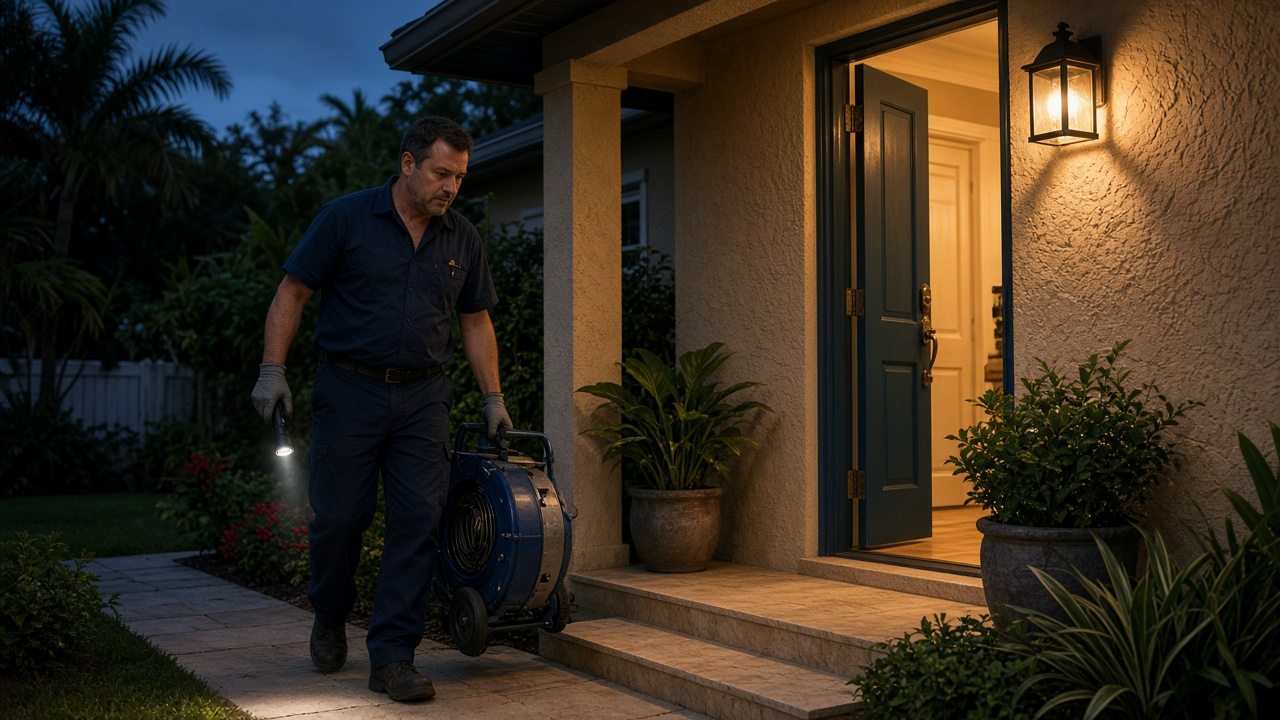
Not every blocked drain is an emergency, and it helps to know the difference. A drain that is slow is something to fix this week. A drain that is completely blocked, backing up into another fixture, or sending water onto the floor is something to deal with now. This page explains how to tell, what to do in the first ten minutes, and what to ask when you call.
Is it an emergency?
Treat the situation as urgent if:
- Water is overflowing from a sink, tub, shower or toilet and will not stop
- Wastewater is coming up through a floor drain, a shower or a tub
- Several fixtures are blocked at once
- There is a sewage smell inside the house
- A toilet will not flush and the only bathroom is affected
- The drain is blocked in a kitchen that you need to use, in a business or in a rental with tenants
A single slow drain, with no overflow and no smell, can usually wait until a time that suits you and the provider. It still helps to deal with it before it gets worse, and the clogged drain repair page covers what to try in the meantime.
What to do in the first ten minutes
- Stop adding water. No flushing, no dishwasher, no washing machine, no showers. Tell everyone in the house.
- Shut off the water to the fixture if it is still running. The shut-off valve is usually under a sink or behind a toilet. Turn it clockwise.
- Stop an overflowing toilet. Lift the tank lid and push the flapper closed, or close the valve behind the toilet.
- Move people, pets and belongings away from the water. If the water might be wastewater, keep children and pets out of it entirely.
- Protect floors. Towels and a bucket help with small amounts; for more water, see the sewer backup page.
- Look for safety risks. If water is near outlets, appliances or a breaker panel, do not touch them while standing in water. Switch off power from a dry spot only if you can do so safely.
- Take photos. They help the provider decide what to bring and may help with insurance.
- Call now.
Do not pour chemical drain cleaner into a drain that is blocked and overflowing. It will not fix a main line problem and it creates a hazard for whoever opens the line.
What to say when you call
You will reach a person who connects you to an independent local provider. The clearer you are, the faster the conversation moves:
- Your town and ZIP code, so the call goes to a provider that covers your area
- Which drains are affected, and which were first
- Whether water is currently overflowing, and from where
- Whether there is a sewage smell
- What you have already done, including any chemicals
- The type of building: house, condominium, townhouse, business
- Whether you know where the cleanout is
Ask the provider directly whether someone can come out today, and how long they expect it to take. We do not set those answers, and we cannot promise availability for any particular day or hour. The provider will tell you.
What a provider typically does at an urgent visit
A typical visit starts with the same question every time: where is the blockage? The technician checks the affected fixtures, locates the cleanout and decides on a method:
- Hand auger or plunger for a single fixture
- A drum machine for a main line or a long branch line
- A root cutter head if roots are the suspected cause. See root intrusion removal.
- Jetting to clean the line after the clog is opened. See hydro jetting.
- A camera to find the cause and to check the line afterwards. See sewer camera inspection.
If the line is damaged, a quick fix may get things flowing, but a repair may be needed. That is a separate conversation, with its own quote. See sewer line repair.
Questions to ask when you call
- Can someone come out today? What time range?
- What is the price for this visit, and what could change it?
- Is a camera look included?
- Is there an extra charge for evenings, weekends or holidays?
- What do I need to have ready?
Evening, weekend and holiday rates are common in the trades, so ask before you agree. The provider, not this website, sets the price. The cost page lists questions that make quotes easier to compare.
Rentals, condominiums and businesses
If you rent, tell your landlord or property manager as soon as you call for help. Many leases say who arranges drain work, and some managers prefer to send their own provider. In a condominium or townhome community, a blockage that affects a neighbor's unit usually points to a shared stack or a shared line, and the association or its manager normally decides who responds. A small business with a blocked kitchen or restroom drain has an extra reason to move quickly, since closing for the day costs money. Tell the person who answers that it is a business, so the provider can tell you whether they work on commercial properties.
Be wary of pressure
An urgent problem is exactly when it is hardest to think clearly, and it is when high-pressure sales happen. Reasonable steps:
- Ask for the price before work begins, and ask what could change it.
- If the quote jumps once work has started, ask for an explanation in writing.
- For large repairs, such as digging or relining, you can ask for a camera recording and get a second opinion once the immediate problem is dealt with.
- Check any contractor's Florida license at MyFloridaLicense.com.
After the emergency
Once the line is open, ask what caused it. A single clog from a wad of wipes is a one-off. A root intrusion, a belly or a broken pipe will come back. The next step in that case is usually a camera inspection, followed by a plan: regular cleaning, a spot repair, or a longer-term fix. If the house is in a condominium or a managed community, tell the association, which may hold information about shared lines.
Serving Bonita Springs and nearby towns
This page is for Bonita Springs ZIP codes 34133, 34134, 34135 and 34136. Calls from Estero, Naples, Fort Myers, Cape Coral, Lehigh Acres and North Fort Myers can also be connected.
Call now and tell them that the drain is an emergency.
Need help now?
Call now. Your call is connected to an independent local service provider who can talk through next steps.