A clogged drain is one of the most common household problems and one of the most misjudged. People tend to assume that because the water was moving yesterday, a bit of effort will fix it today. Sometimes it will. But a clog is only the symptom, and the right repair depends on where in the pipe it sits and what it is made of. This page explains how clogged drain repair is usually approached, what you can try first, and when it is time to call.
What counts as a clogged drain
A clog is any obstruction that reduces or stops the flow of water through a drain line. It can be partial, with slow drainage and gurgling, or complete, with nothing moving. Location matters more than severity:
- At the fixture. A stopper, strainer or the first section of pipe below the opening. Hair, soap and food scraps collect here.
- In the trap. The curved section under a sink, tub or shower that holds a little water to block sewer gas. It is built to catch debris, and it does.
- In the branch line. The horizontal pipe that carries a fixture's wastewater to the main drain. Grease and wipes are the usual culprits.
- In the main line. The large pipe that carries everything out of the house. When it clogs, several fixtures are affected. See the main line clog page.
Clogs close to the fixture are the simplest and quickest to deal with. Clogs deeper in the system need longer equipment and sometimes a camera to find out what is going on.
Things you can safely try first
Before you call, a few low-risk steps are worth five minutes:
- Clear the stopper or strainer. Pull out anything you can see. In tubs and showers, a pair of pliers or a small hand tool lifts hair mats that are invisible from above.
- Use a plunger properly. Cover the overflow opening in a sink or tub with a wet cloth, make sure there is enough water to cover the plunger cup, and push and pull steadily rather than hard. A flange plunger works on toilets; a cup plunger works on flat-bottomed sinks and tubs.
- Check the other fixtures. If a second fixture nearby is also slow, stop. You are likely dealing with a shared branch or main line, and plunging will not help.
- Clean the trap under a bathroom or kitchen sink if you are comfortable doing it. Put a bucket underneath, unscrew the slip nuts by hand, and empty the trap. Reassemble hand-tight.
Please skip these:
- Chemical drain openers. In a fully blocked pipe the product has nowhere to go, so it sits there. It can irritate skin and eyes, can damage some pipe types and fittings, and creates a hazard for anyone who opens the line afterwards. If you have already poured some in, tell the provider.
- Repeated hard plunging on a toilet when the water level is already high. It can send water over the rim.
- Pushing a household wire hanger into the drain. It can scratch the pipe and snag the clog instead of clearing it.
What a provider usually does
Methods vary, but the principle is the same: get access to the clog, break it up or pull it out, and confirm that water now flows freely. For most household clogs that means one or more of the following.
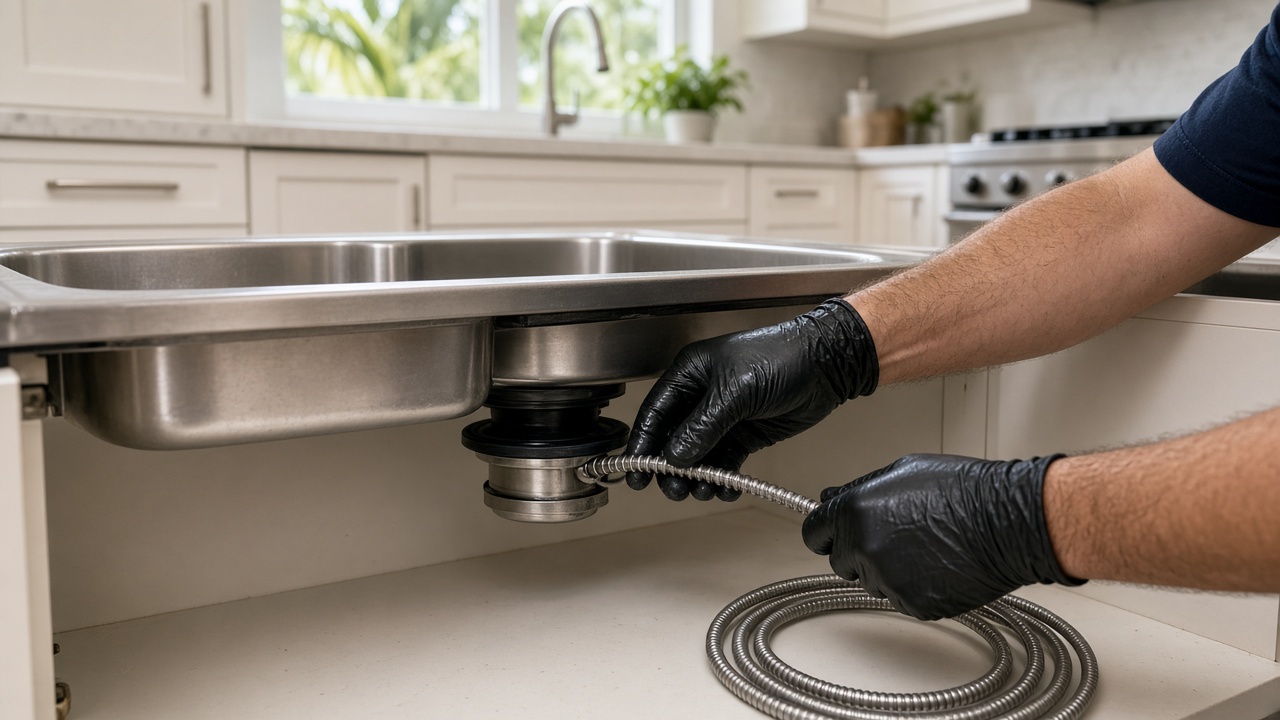
Hand auger. A flexible cable with a corkscrew tip, turned by hand or with a small drill head. It is used on sinks, tubs and short branch lines. See the kitchen sink and shower and tub pages for fixture-specific advice.
Drum machine. A larger motorized cable machine with a range of cutting heads, used for longer or tougher lines. It is the usual tool when the clog is past the first few feet.
Hydro jetting. High-pressure water scours the inside of the pipe and flushes debris toward the main line. It is a good choice for grease and sludge. See hydro jetting.
Camera. A small camera on a cable lets the technician see the clog and the condition of the pipe. It is not a clearing tool, but it explains why a clog formed, which helps if it keeps coming back. See sewer camera inspection.
After clearing, a good provider runs water to check the flow. If the drain clears and then clogs again within days, that is a clue that something in the pipe is catching debris.
Common causes of clogs in Bonita Springs homes
Grease is the leader in kitchens. Warm cooking fat looks harmless going down the drain and sets hard a few feet away. Over months it narrows the pipe until a small piece of food closes it.
Bathrooms clog with hair and soap scum. Homes with long hair in the household tend to see it in the shower first.
Wipes and paper products labeled as flushable cause trouble in toilets and main lines. They do not disintegrate the way toilet paper does and they act like a net for everything else.
Older homes may have pipes that have developed rough interiors, joints that have shifted, or small bellies, which are low points where water and waste settle. These show up as repeat clogs in the same spot. If you live in an older home and the same drain keeps clogging, mention its age when you call.
Tree and palm roots reach lines through cracks and open joints. They are a typical cause of recurring main line clogs. See root intrusion removal.
Warning signs that this is more than one clog
Call a provider rather than keep trying if:
- More than one fixture is affected.
- Wastewater comes up in a lower drain, like a shower or floor drain, when you use a toilet or washing machine.
- You smell sewage inside the house or near the cleanout.
- The drain clears briefly then returns to the same state.
- There is a wet, spongy or unusually green area in the yard along the line of the sewer.
Any of these points to the main line, and the quicker you stop adding water the less water ends up where it should not. The sewer backup page explains what to do if wastewater is already inside.
What to tell the provider when you call
A clear description saves time and helps the provider bring the right equipment. When you call now, try to mention:
- Which drains are affected and in what order they became slow
- Whether the problem is constant or only after certain actions, like running the washing machine
- What you have already tried, including any chemical product
- The type of home: single-family house, condominium, townhouse or small commercial unit
- The age of the home, if you know it
- Your town and ZIP code, so the call goes to a provider who covers your area
Serving Bonita Springs and nearby towns
This page is written for Bonita Springs homes in ZIP codes 34133, 34134, 34135 and 34136. Calls from nearby towns can also be connected. See the pages for Estero, Naples, Fort Myers, Cape Coral, Lehigh Acres and North Fort Myers, or the service area page for the full ZIP code list.
Call now and say where you are and which drain is giving you trouble.
Need a clogged drain cleared?
Call now. Your call is connected to an independent local service provider who can talk through the problem and schedule a visit.