Hydro jetting is a drain-cleaning method that uses water under high pressure to clean the inside of a pipe. A cable pokes a hole through a clog; jetting cleans the pipe itself. That distinction is why people ask for it when a drain has been cleared several times and keeps coming back. This page explains how it works, when it is a sensible choice and when it is not.
What hydro jetting is
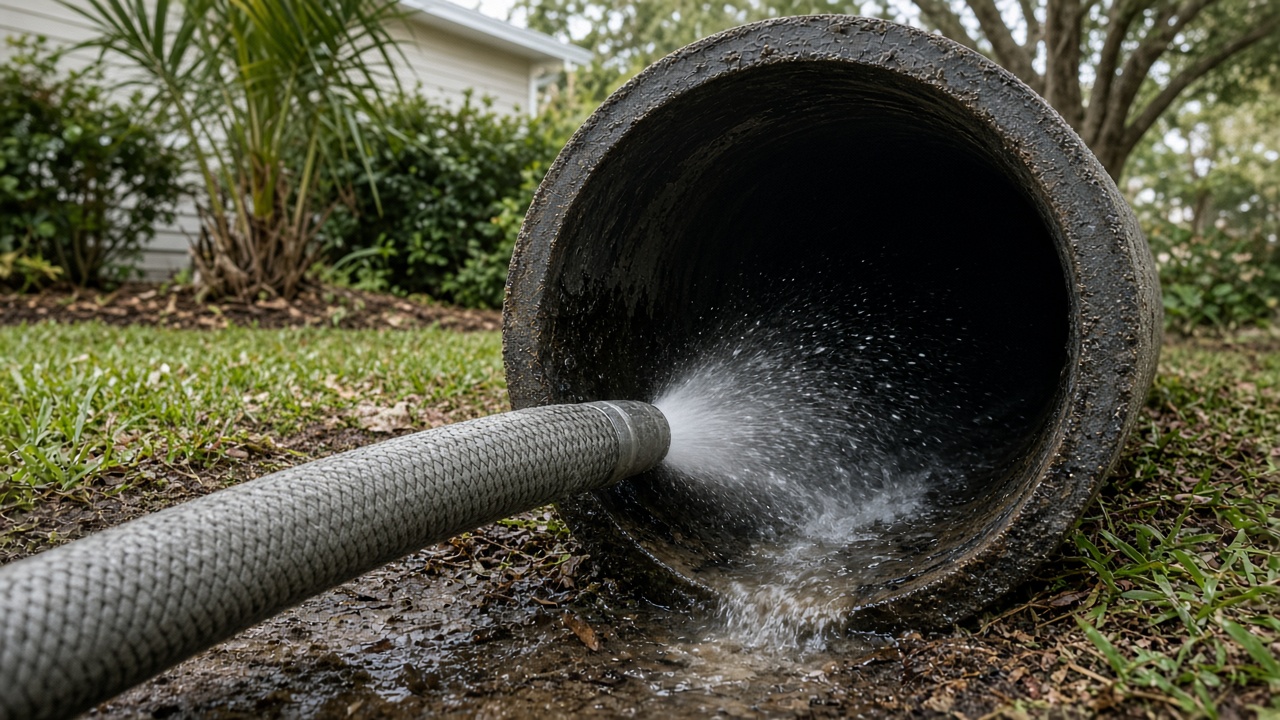
A hydro jetting machine pumps water through a flexible hose to a nozzle at the end. The nozzle has jets that point backward and sometimes forward. When it is fed into the drain line, the backward jets pull the hose forward through the pipe while the water scrapes the walls clean and carries debris back toward the point where the hose entered. Depending on the machine and the pipe, a provider will adjust the pressure and choose a nozzle to suit the material. A forward-facing nozzle can open a stoppage; a rotating or fan-style nozzle cleans the pipe wall.
The tool does not cut or grind. It relies on water, volume and pressure, which is why it is often used to deal with grease, soap scum, sludge, mineral scale and fine silt that a cable tends to push through rather than remove.
Hydro jetting versus snaking
A cable, sometimes called a snake, is a long flexible steel line with a tip made for catching or cutting. It is quick to set up and excellent for single obstructions, like a hairball or a wad of paper. In a line coated with grease, though, a cable can leave a channel through the middle of the build-up while the rest stays on the pipe wall. The drain flows again for a while, and then the narrowed pipe closes again.
Jetting tends to be chosen when:
- A kitchen or main line has clogged several times in a short period
- A restaurant-style or heavy-use kitchen has a grease-coated line
- A camera shows build-up on the pipe wall, not just one obstruction
- Roots have been cut back and the line needs cleaning afterwards
- A line is large enough for a jetting hose and in sound condition
Many providers combine methods. They may use a cable to open the pipe, a camera to inspect, then jetting to clean. The snake vs hydro jetting post walks through how to decide.
When hydro jetting is not the right tool
Jetting is not a cure for everything, and a good provider will tell you so. It may not be appropriate when:
- The pipe is damaged. A cracked, collapsed or badly offset pipe can be made worse by high pressure. A camera look first is a sensible step on any older line. See the sewer camera inspection page.
- The clog is a solid object. A child's toy or a piece of masonry needs to be retrieved, not washed through.
- The line is very old or fragile. Brittle clay, old cast iron with heavy scale or pitch-fiber pipe may not tolerate high pressure. A provider will often choose a lower setting or a different approach.
- There is a simple fixture clog. A drain that is slow in one sink does not need a jetting machine.
If there is any question about pipe condition, ask for a camera look before jetting. Some providers do this as a matter of course.
What a jetting visit usually looks like
The details differ from one provider to the next, but the order is predictable:
- Assessment. The technician asks about the history of the drain and which fixtures are affected.
- Access. The machine hose needs a way into the pipe, typically a cleanout. If there is no accessible cleanout, the provider may pull a toilet or use a roof vent, which usually adds time. Knowing where your cleanout is helps.
- Setup. The machine is placed outdoors or near the cleanout, with hoses run to the access point and a water supply connected.
- Jetting. The hose is fed in slowly. The technician moves it back and forth across problem areas and watches the output for debris.
- Camera check. Many providers confirm the result with a camera, which also shows pipe condition.
- Flow test. Water is run through fixtures to confirm that the line is flowing freely.
Jetting uses a lot of water and can be loud. Wastewater and debris move toward the main line or toward the street connection, so access to the line and a clear working area help.
What jetting is used for around Bonita Springs
Kitchens are the typical case. Cooking fat is one of the biggest causes of repeat clogs in homes and restaurants alike, and a kitchen line that has backed up more than once is a good candidate.
Main lines in older homes are another. Mineral scale and sediment can narrow a pipe over years, and roots that have been cut with a cable leave fine fibers behind which collect debris. A cleaning pass afterwards helps reduce the chance of the same roots catching the next clog. See root intrusion removal.
Condominium and townhome buildings with shared stacks sometimes use jetting as a maintenance step. If a building association is involved, the provider may need approval before working on a shared line. The FAQ page explains how that usually works.
What affects the visit and the price
The provider sets the price. These are the factors that commonly move it:
- Line size and length. More pipe means more time.
- Access. A cleanout makes the job simpler. Having to pull a fixture or use a vent adds steps.
- Condition of the line. A heavily scaled or root-filled line takes longer.
- Camera work. If a camera inspection is included, ask whether it is part of the price.
- Timing. Evenings, weekends and holidays may carry a different rate.
Do not rely on a figure you read elsewhere. Ask for a price before work starts. The cost page lists questions that make quotes easier to compare.
Questions to ask a provider about jetting
- Is a camera check done before or after jetting?
- What pressure range do you use on a line like mine?
- Will you jet through the cleanout, or does the work need another point of access?
- What happens if the camera shows damage?
- Is there a charge if jetting does not clear the line?
You are entitled to a clear answer to each. If an answer is vague, say so, and ask for the details in writing.
Serving Bonita Springs and the nearby towns
Calls from Bonita Springs ZIP codes 34133, 34134, 34135 and 34136 are connected to an independent local provider. The same service is available in Estero, Naples, Fort Myers, Cape Coral, Lehigh Acres and North Fort Myers. Whether any one provider offers jetting for your property type is something to confirm on the phone.
Call now and mention that you are asking about hydro jetting.
Next step
If a drain has been cleared and returned, jetting may be the right question to ask. Call now and you will be connected to an independent local provider who can talk through whether it fits your situation.