A single slow sink is a small problem. A main line clog is a house-wide one. The main line is the large pipe that collects every fixture's wastewater and carries it out of the building. When it narrows or blocks, everything upstream suffers, and the first signs are subtle: a gurgle, a slow tub, a toilet that bubbles. This page explains how to tell, what to do and what clearing involves.
How the drain system fits together
Each fixture in a house has its own small drain and trap. These join into branch lines, and the branches join the main line. The main line then leaves the building, running underground to the public sewer connection or to a septic tank. In many Florida homes built on slabs, much of that pipe is below the floor or under the yard, so a blockage can be hard to reach without the cleanout.
Because every branch relies on the main line, a blockage there acts on all of them. Water from the highest fixtures finds its way to the lowest openings, which is why a tub, a shower or a floor drain at the lowest level is often the first to overflow.
Ten-minute check: one fixture or the whole house?
- Run the water in the sink farthest from the main line, such as a bathroom sink on the other side of the house. Note whether it drains normally.
- Flush the toilet. Watch the water in the nearest tub or shower drain. If it bubbles or rises, the main line may be restricted.
- Run the washing machine drain if you have one, or empty a bucket into a laundry sink, while you watch a tub or floor drain.
- Check the lowest drain in the house for water pooling or smells.
If only one fixture misbehaves, the problem is probably local, and clogged drain repair is the place to start. If several are affected, or wastewater rises in a lower drain, the main line is the likely culprit.
Do not repeat the test if wastewater starts coming up. Stop using water and follow the emergency drain cleaning steps.
Signs of a main line clog
- Multiple slow drains at the same time
- Gurgling from drains or toilets when other fixtures are used
- A toilet that bubbles or rises when the washer drains
- Water backing up in a shower, tub or floor drain
- A sewer smell indoors or at the cleanout
- A clog that returns soon after being cleared
Common causes
Wipes and paper products. Wipes, paper towels, feminine products and "flushable" items are among the most common causes of main line blockages.
Grease. Fat that has cooled and hardened on the pipe wall, narrowing the line over time. See hydro jetting.
Tree and palm roots. A frequent cause of repeat main line clogs. See root intrusion removal.
A low spot or sag. Water and solids settle in a belly and gradually build up.
A collapsed or broken section. A damaged pipe can block the flow completely. See sewer line repair.
Objects. Toys, cloth, rags and the occasional unlikely item.
Problems beyond the property line. A blockage in a shared or public line shows the same signs. If neighbors have the same trouble, say so.
How the main line is cleared
A provider typically goes through these steps:
- Finds access. The cleanout is the best point. If it is missing or blocked, the provider may pull a toilet or use a roof vent, which takes longer.
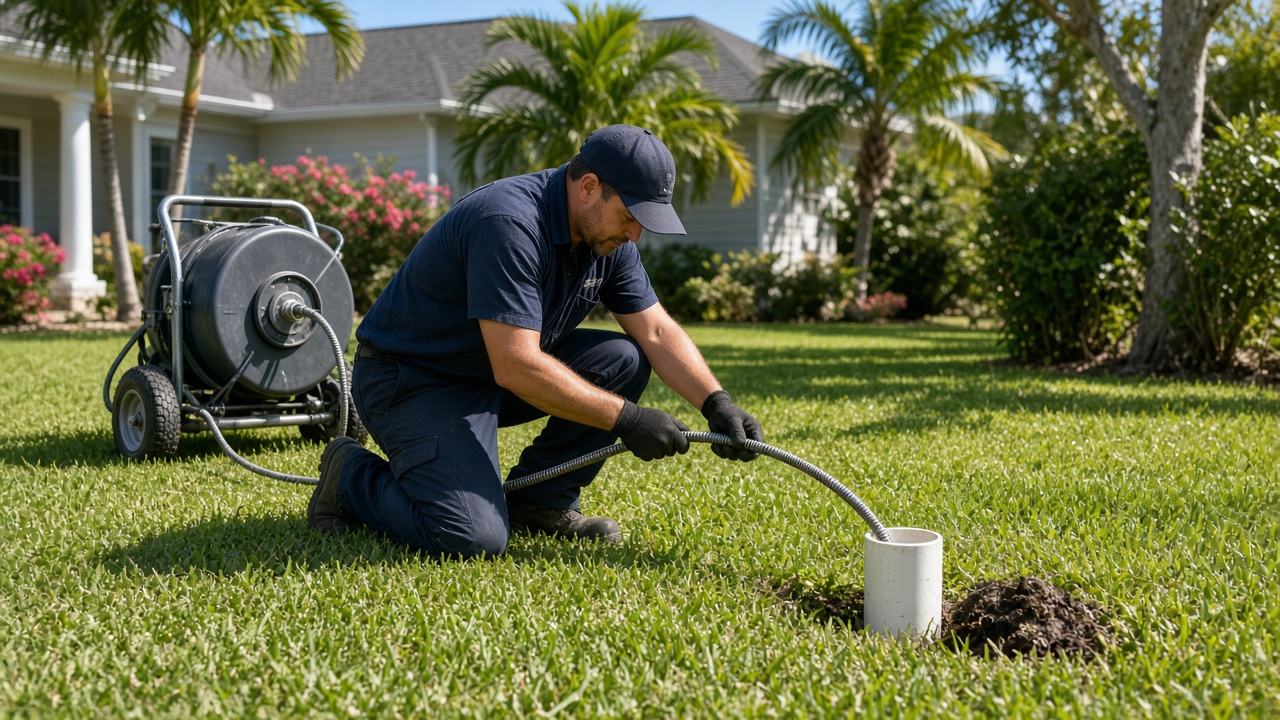
- Clears with a drum machine. A cable with a cutting head is fed into the line, working through the blockage.
- Adds jetting where it helps. Water pressure washes the pipe and removes build-up.
- Runs a camera if the clog has returned, was severe or has an unclear cause. See sewer camera inspection.
- Tests the flow. Water is run through multiple fixtures at once.
- Explains findings. You should be told what was found and what it means.
Where the blockage turns out to be beyond your property line, the provider may suggest contacting the utility that operates the system.
Condominiums and townhomes
In a building with shared drain stacks, a main line problem may affect several units. If a neighbor's drains are slow too, tell the association or property manager at once, as they typically decide how a shared line is cleared and who pays. Say so when you call so the provider knows what to expect. The FAQ page has more on shared lines.
Buying or selling a home
A main line that has been clogged once may clog again, and buyers sometimes ask about it. If you are buying, particularly an older home or one with large trees near the sewer line, consider asking a provider about a camera inspection before closing. If you are selling and the line has had trouble, a recent inspection with a recording can answer a buyer's questions before they are asked. Neither is a requirement, but both are easier to arrange early than in the last week of a sale.
Preventing main line clogs
- Flush only toilet paper.
- Never pour grease, fat or oil down any drain; wipe pans with a paper towel first.
- Use strainers in kitchen and shower drains.
- Know where the cleanout is and keep it accessible.
- Arrange a camera inspection after a main line backup.
- Ask a provider whether periodic cleaning makes sense if roots or grease are the cause.
- If you own a seasonal home, run water in every drain on arrival and watch for slow drains in the first days.
What affects the price
The provider sets the price. Main line clearing is often priced differently from fixture clearing, and the factors include access, line length, clog type, equipment needed, camera work, and when the visit takes place. Ask for the price first. The cost page lists questions for comparing quotes.
Serving Bonita Springs and nearby towns
This page is written for Bonita Springs ZIP codes 34133, 34134, 34135 and 34136. Calls from Estero, Naples, Fort Myers, Cape Coral, Lehigh Acres and North Fort Myers can be connected too. If your home is on a septic tank, say so when you call: the problem can look the same but needs different help.
Call now and tell them several drains are slow.
Ready to clear the main line?
Call now. Your call is connected to an independent local service provider who can talk through the problem.